Back to Blog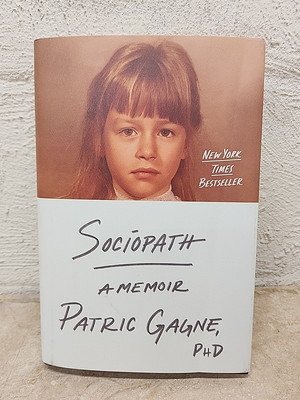
Sociopath: A Memoir by Patric Gagne PhD
Katherine Roberts LMFT-Associate, TBRI Practitioner
Patric Gagne spends the memoir tracing her own life from a childhood where she quietly understood she didn't feel things the way the people around her did — no guilt, no fear, no empathy in the way most of us take for granted — through the long process of naming that, understanding it, and eventually building a career and a doctorate around it. She went on to earn a PhD in clinical psychology, with a dissertation examining the relationship between sociopathy and anxiety, and became a therapist working with people who carry the same diagnosis she does.
What stayed with me most is how deeply hopeful this book is, despite the subject matter. Gagne isn't writing a redemption arc where she overcomes who she is. She's writing something rarer: an account of someone who took the very traits society taught her to hide — the detachment, the compulsions, the parts of herself that made other people uncomfortable — and found a way to build a genuinely successful, meaningful life around them instead of in spite of them. For any parent or individual sitting with a serious mental health diagnosis, wondering whether that diagnosis forecloses a full life, this book is quiet proof that it doesn't have to.
It's also just a deeply moving read. Gagne doesn't sanitize the parts of her story that are hard to sit with, and she doesn't ask for absolution either. She lets the reader feel the isolation of being a child who senses she's fundamentally different, and the exhausting labor of performing normalcy for years just to be tolerated. That honesty is what pulled at my heartstrings — not because it was engineered to, but because she trusted the story enough not to soften it.
Professionally, this book did something for me that I didn't expect. It gave me language and imagery for the apathy I sometimes see described by clients — the flatness, the disconnect, the sense of going through motions without the feeling underneath. Gagne writes that experience from the inside, in a way that made me more curious and less quick to categorize the next time I hear a client describe something similar.
This is a book about stigma, but more than that, it's a book about what becomes possible when someone stops trying to be someone they're not and instead gets genuinely skilled at being exactly who they are. I'd recommend it to anyone in the mental health field, and to any parent trying to imagine a full future for a child who feels fundamentally different from their peers.